A maintenance technician grips the rim of a full 55-gallon drum and rocks it sideways. The drum tips, rolls a short distance, and stops. The technician repeats the motion to cross the workshop, loading the lower back with dangerous force each time. A drum dolly changes the picture completely. It allows one person to move a 300 kg drum safely and quickly, with minimal effort. This guide explains what drum dollies do, how to read their capacity ratings, and which type fits your operation.
What Is a Drum Dolly and Why It Belongs in Your Facility
A drum dolly is a wheeled support platform that carries a drum in an upright orientation. The most common design uses a round steel frame that fits around the drum bottom, plus two fixed and two swivel casters. You position the dolly under the drum, lower the drum into the ring, and roll it to the destination.
Facilities choose drum dollies for three practical reasons:
- Injury prevention: no lifting, tilting, or dragging is required.
- Product protection: the drum rim and body stay free from dents and scrapes.
- Workflow speed: a loaded drum moves from workstation to storage in seconds.
Standard material handling equipment categories such as pallet trucks, lift tables, and drum dollies work together to keep goods moving through a warehouse. A dolly alone covers the short-distance transport step that forklifts cannot perform efficiently in tight aisles.
Load Capacity Ratings: What They Mean
Load capacity is the most important specification on a drum dolly. It defines the maximum drum weight the frame and casters can support without permanent deformation or failure. Match the rating to the heaviest drum your team actually moves, including the product inside. Capacity ratings assume the load is centered and evenly distributed. A drum that hangs over the ring edge creates point loads that reduce effective capacity.
The chart compares load capacities of four models commonly found in this product range. The DT250 hydraulic drum truck is rated at 250 kg, which suits small and half-filled drums. The DG360 standard ring dolly covers 360 kg, enough for used oil and common chemical drums. The DE450 drum truck reaches 450 kg, matching most 210-liter steel containers. The DG720 heavy-duty dolly tops the group at 720 kg, handling dense liquids such as paints, inks, and industrial coatings. The gaps between these ratings are not arbitrary; they correspond to real drum classifications used across European and North American facilities.
 DG720 Heavy-Duty Drum Dolly for Dense Liquid Drums With a 720-kg capacity, this heavy-duty dolly matches the top rating in the product range, making it suitable for dense liquids like paints, inks, and industrial coatings. View Product →
 Types of Drum Dollies and Drum Handling Equipment
Not every drum handling task calls for the same tool. Four main types appear in this product family.
Standard Ring Dolly
The standard ring dolly is a circular frame on casters. It is ideal for drums that are already on the floor and only need horizontal transport. Choose this type when you need simplicity, compactness, and the ability to spin the drum in place.
 DG360 Standard Ring Dolly for Floor-Level Drum Transport This circular dolly on casters suits drums already on the floor, offering simple, compact horizontal movement and the ability to spin the drum in place. View Product →
 Drum Truck
A drum truck uses a lever and two wheels to tip and lift one side of the drum while rolling. It is better for loading docks, small steps, and positioning drums onto low platforms. Drum trucks require more operator technique and put more force on the rim, so they suit occasional use.
Hydraulic Drum Truck
A hydraulic drum truck replaces manual leverage with a hydraulic pump. The operator lifts the drum by working the handle, which removes the physical strain and provides precise height control. This design is the right choice when drums must be placed exactly onto scales or under dispensers.
Clamp-Style Attachments
Clamp attachments mount onto forklifts or hoists and grip the drum from the top or side. They handle vertical lifting and stacking that wheeled dollies cannot. They complement, rather than replace, a floor-level drum dolly.
This radar chart compares five traits across the three wheel-based drum handlers. The standard ring dolly leads in maneuverability and affordability, but offers almost no lifting advantage. The drum truck balances lifting ease, drum protection, and stability, making it a versatile generalist. The hydraulic drum truck dominates in lifting ease, drum protection, and stability, but costs the most and handles less well in narrow aisles. The performance spread explains why many facilities own more than one type. For daily drum movement on flat floors, a standard ring dolly is normally the easiest and most economical starting point.
Wheels, Frames, and Drum Compatibility
Wheel material changes how a dolly rolls on different floors. Polyurethane wheels roll quietly over concrete, resist abrasion, and protect the surface. Rubber wheels grip better but wear faster and can mark light floors. Nylon wheels have low rolling resistance and suit clean dry floors, yet transmit vibration. The frame must be rigid enough to hold its shape under a full load.
Look for welded steel construction with a guide lip that prevents the drum from slipping off. A powder-coated finish resists corrosion and enables easy cleaning. Verify that the ring inner diameter matches your drum bottom. European 210-liter drums commonly measure 571 mm, while some North American drums reach 600 mm, so the dolly ring must not be a loose fit.
| Wheel material | Best for | Rolling effort | Floor marking | Durability |
|---|---|---|---|---|
| Polyurethane | Concrete, epoxy, rough industrial floors | Low | Minimal | High |
| Rubber | Smooth concrete, sealed floors | Medium | Can leave marks | Medium |
| Nylon | Clean, dry indoor floors | Very low | None | High |
| Steel | Asphalt, gravel, outdoor yards | High | Can scratch | Very high |
Safety Practices That Prevent Injuries
Drum dollies reduce risk only when used correctly. Match the dolly capacity to the actual drum weight; overloading a 360 kg dolly with a 450 kg drum invites structural failure. Position the drum centrally on the ring so the load stays balanced. Push the dolly with both hands, and keep feet clear of the caster paths.
Always slow the dolly when moving down slopes, because drum weight multiplies momentum. Inspect casters and welds before each shift. A cracked weld or seized bearing can pitch the whole load sideways and cause a serious foot injury.
This line chart shows the recommended capacity margin for drum dollies. The dashed gray line represents the actual weight of a drum in kilograms. The solid red line represents the rated capacity you should buy, based on a standard 1.5 times safety factor. A drum that weighs 200 kg requires a dolly rated at 300 kg, while a 250 kg drum needs a 375 kg rating. The margin absorbs dynamic shock loads when crossing thresholds and rough floors. It also covers the difference between nominal drum volumes and actual fill weights.
How to Choose the Right Drum Dolly for Your Operation
Start by weighing the heaviest drum your team moves, including its full contents. Multiply the result by 1.5 to find the minimum dolly capacity. Then consider the floor surface, aisle width, and whether you need a lifting function or simple transport. Verify that the ring diameter matches the drum bottom, and choose wheel material based on your flooring.
This column chart summarizes typical maximum ratings for the four drum handling categories. A standard ring dolly reaches around 360 kg, which covers most routine warehouse jobs. A drum truck extends to about 450 kg and adds partial lifting. Hydraulic drum trucks climb to roughly 500 kg in this comparison, with precise height control for scales and dispensers. Heavy-duty models such as the DG720 reach 720 kg and handle practically all standard industrial drums. These ratings give you a quick way to set budget and avoid paying for capacity that your operation never needs.
To see how a drum dolly fits into your broader workflow, review the key factors that guide material handling equipment selection . The right dolly should integrate easily with your existing pallet trucks, racks, and workstations.
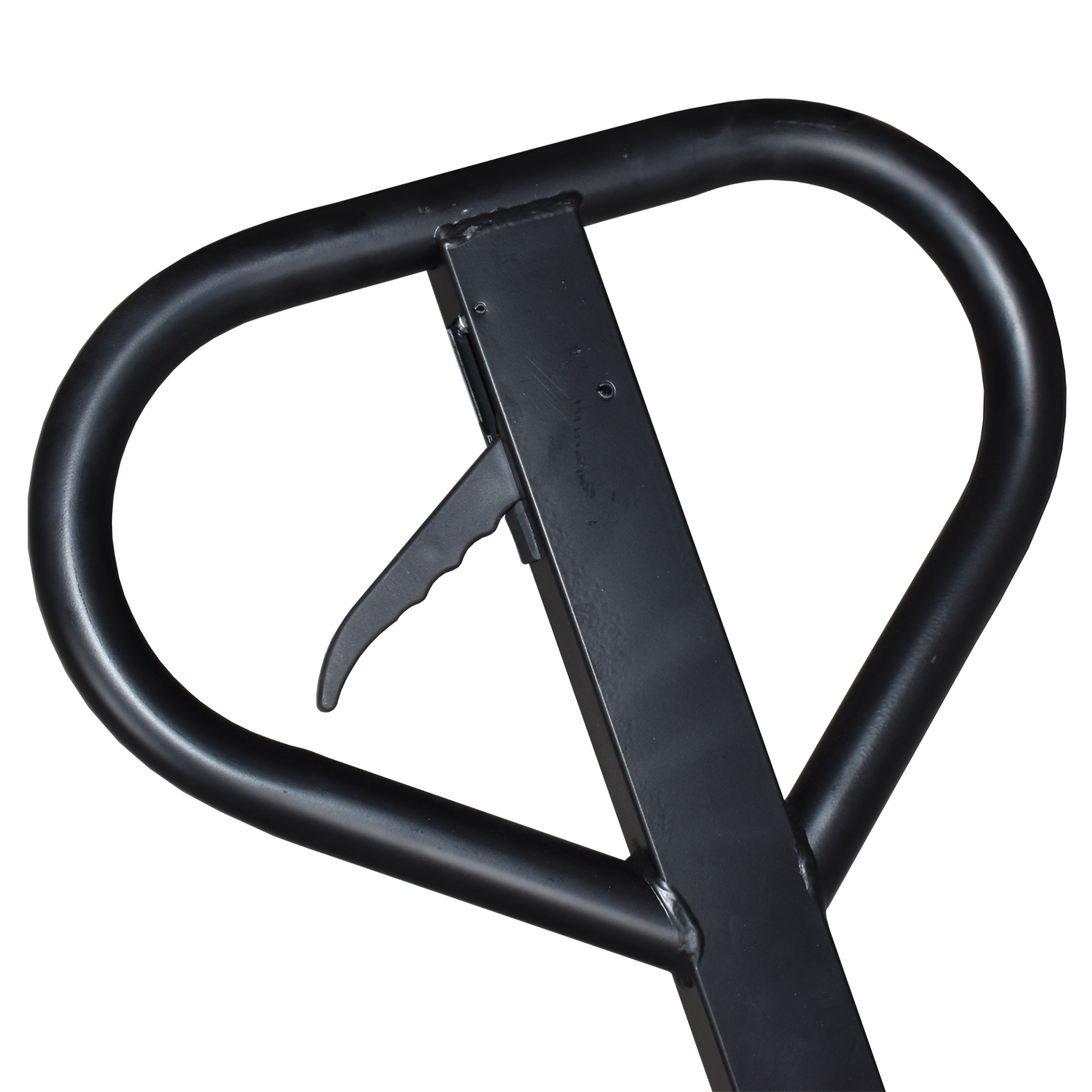 DT250 Hydraulic Drum Truck for Small Drums Rated at 250 kg, this hydraulic drum truck fits small or half-filled drums, providing lever-and-wheel lifting for loading docks and positioning onto low platforms. View Product →
 Maintenance: Keep the Dolly Rolling
Drum dollies are simple but not maintenance-free. Keep casters free of dirt, thread, and chemical residue that can block rotation. Apply general-purpose grease to caster bearings every few months. Check the bolts on caster plates and inspect ring welds for cracks. Store the dolly upright or on a wall rack so it does not collect floor debris. A well-maintained dolly keeps its rolling resistance and lasts for many years.
Final Recommendations
Choose the smallest dolly that still meets the 1.5 times safety margin for your heaviest drum, with the wheel material and ring size matched to your floor and drum type. For most facilities, a standard ring dolly with polyurethane casters is the right starting point. If drums are lifted onto scales or dispensers, upgrade to a hydraulic drum truck. The correct drum dolly does not simply move heavy containers. It protects your people and your product on every rotation.